
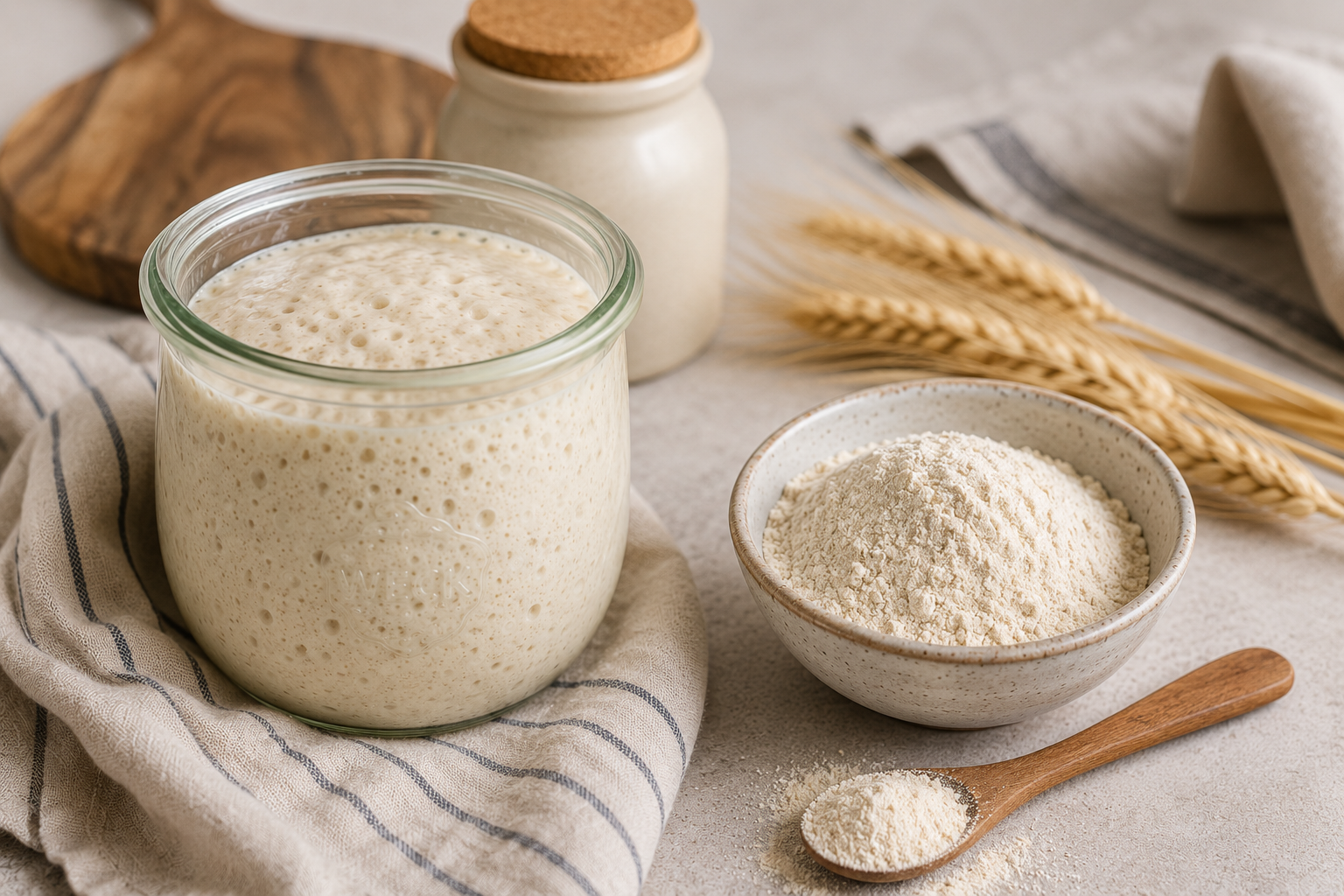
Live vs Dried Sourdough Starter: Which Should You Buy?
If you have decided to bake your own sourdough, one of the first real decisions you will face is do you buy a Live vs Dried Sourdough Starter. The two options you will keep running into are a live starter and a dried one, and it is not always obvious which is the sensible choice.
This guide walks through the live vs dried sourdough starter question the way we would explain it to anyone who asked us in person: honestly, without hype, and with your first few loaves in mind.
Both options can produce wonderful bread. The difference is mostly about how quickly you can begin, how forgiving the starter is while you are still learning, and how it fits the way you like to work. If you already know you want to start baking soon, our 30-year live sourdough starter is the simplest route — but it is worth understanding why before you commit, so the rest of this article lays out the trade-offs.
Contents
- What Is The Difference Between A Live And Dried Sourdough Starter?
- How A Live Starter Works
- How A Dried Starter Works
- Live vs Dried Sourdough Starter Comparison Table
- Time To First Loaf
- Shelf Life And Storage
- Reliability For Beginners
- Cost Comparison
- Which Option Do We Recommend?
- Buying A Sourdough Starter In The UK
- Frequently Asked Questions
What Is The Difference Between A Live And Dried Sourdough Starter?
A sourdough starter is simply a living culture of wild yeast and bacteria that ferments flour and water, giving sourdough its rise and its gentle tang. The culture itself is the same idea in both cases. What differs is its state when it reaches you.
A live starter arrives active and feeding, ready to bake with after a refresh or two. A dried starter — sometimes sold as a dehydrated sourdough starter — is the same culture that has been dried into flakes or powder and put into a dormant state, which you reactivate at home with flour and water over several days.
Think of it as the difference between a plant delivered already growing and a packet of seeds from that same plant. Both get you to the same place. One is further along the journey when it lands on your doorstep.
How A Live Starter Works
A live culture is awake when it arrives. After a feed of flour and water and a little time at room temperature, it bubbles back to full strength and is ready to leaven a loaf.
Because the microbial community is already established and balanced, the behaviour is predictable from the start. It rises on a fairly reliable schedule and tells you clearly when it is ready to bake.
For a beginner, that predictability matters. When your starter is dependable, you can focus on learning the things that actually shape your bread, such as shaping, proving and timing, rather than wondering whether the culture itself is healthy.
How A Dried Starter Works
A dried starter is dormant rather than dead. To wake it up, you rehydrate the flakes and begin a feeding routine, usually once or twice a day, until the culture becomes active and reliable.
Depending on conditions in your kitchen, this reactivation typically takes anywhere from around five days to a couple of weeks.
The upside is convenience on the shelf. A dried starter keeps for a long time, posts easily, and can sit in a cupboard until you are ready. The trade-off is that the early reactivation phase asks a little more patience and attention, and the results can be slightly less predictable while the culture finds its feet.
Live vs Dried Sourdough Starter Comparison Table
Factor
Live Starter
Dried Starter
Time to first loaf
A few days (often 1–3 after a refresh)
Around 5–14 days to reactivate
State on arrival
Active and feeding
Dormant flakes or powder
Reliability for beginners
High — predictable from the start
Moderate — settles after reactivation
Shelf life before use
Short — best used promptly
Long — keeps for months in a cupboard
Postage and storage
Perishable; better with prompt delivery
Stable; easy to post and store
Upfront cost
Usually a little higher
Usually a little lower
Best suited to
Bakers who want to start now
Bakers happy to revive in their own time
If you’re still deciding what else you’ll need alongside your starter, our Build Your Own Sourdough Starter Bundle lets you choose your culture, jar and tools in one place.
Time To First Loaf
This is usually the deciding factor.
With a live culture, you feed it, wait for it to become lively, and you can often be baking within a few days. With a dried culture, you are effectively raising the starter from dormancy first, which commonly takes somewhere between five days and two weeks before it is strong enough to leaven a loaf well.
Neither is better in the abstract. It depends entirely on your timeline.
If you are excited and want a loaf in the oven this weekend, a live starter removes the waiting. If you are planning ahead and do not mind a gentle daily feeding routine to begin with, a dried starter is perfectly fine.
Shelf Life And Storage
Here the dried starter has the clear advantage.
Dried flakes are stable and keep for a long time in a sealed container in a cool, dry cupboard, which makes them ideal as a backup, a gift, or simply for someone who is not quite ready to commit to a feeding schedule.
A live starter is perishable by nature. Once it is established in your kitchen you can slow it right down by keeping it in the fridge and feeding it weekly, but in its first days it wants to be at room temperature and used reasonably promptly.
Reliability For Beginners
If there is one place we lean towards a recommendation, it is here.
A live starter behaves consistently from day one because the culture is already mature and balanced. For someone learning, that consistency is genuinely valuable because it means that when a loaf does not turn out, you can usually trace it to something you did rather than to an unsettled starter.
A dried starter can absolutely become just as reliable, but the reactivation window is the part where beginners most often feel uncertain.
If you would like a fuller picture of what a beginner actually needs around the starter — jars, tools and the bits you can skip — our sourdough starter kit buyer’s guide is a good companion read.
Cost Comparison
In broad terms, a dried starter tends to carry a slightly lower upfront price because it is light, stable and simple to post.
A live starter usually costs a little more, partly because it is perishable and needs to reach you in good condition.
It is worth keeping that difference in proportion, though. A starter is something you buy once and then maintain for free with flour and water — potentially for years.
Choose the option that matches how soon you want to bake and how much early attention you are happy to give.
Which Option Do We Recommend?
For most beginners, we recommend starting with a live culture.
It removes the uncertainty of reactivation, gets you baking faster and makes it easier to learn the fundamentals of sourdough. That’s why our 30-year live sourdough starter remains our most popular choice for first-time bakers.
Once it is thriving, you can dry a little of your own at home to keep as insurance, which gives you the best of both worlds.
A dried starter is the better fit if you value shelf stability, you are buying ahead of time, or you simply prefer the idea of reviving a culture at your own pace.
It is also a sensible, low-commitment choice as a gift.
Buying A Sourdough Starter In The UK
One practical point worth knowing if you are buying in the UK: a live culture is perishable, so it is best ordered from a supplier who posts it promptly and packs it to survive the journey.
A dried starter is far more forgiving on this front, which is part of its appeal.
You can browse both alongside everything else you might need among our sourdough starters.
If you would rather not piece a setup together yourself, you can also Build Your Own Sourdough Starter Bundle and choose the culture, jar and tools that suit how you want to bake — a tidy way to get everything in a single order.
If you’re still deciding what equipment, jars and tools you’ll need alongside your culture, read our sourdough starter kit buyer’s guide.
Whichever you choose, you are not locked in. Plenty of bakers begin with one and keep a dried backup of the other.
The important thing is simply to start — the first loaf is closer than you think.
Frequently Asked Questions
Is a live or dried sourdough starter better for beginners?
For most beginners we lean towards a live starter, because it is active on arrival and behaves predictably while you are still learning.
How long does a dried sourdough starter take to reactivate?
It usually takes between five days and two weeks of regular feeding for a dried starter to wake up fully and become strong enough to leaven a loaf.
Can I bake with a live starter straight away?
Almost. You will normally give a live starter a refresh and a short rest at room temperature so it returns to full strength.
Does a dried starter make worse bread than a live one?
No. Once reactivated, a dried starter can make bread every bit as good as a live one.
How do I store a live sourdough starter?
Keep it at room temperature initially and feed regularly. Once established, store it in the fridge and feed roughly once per week.
Which sourdough starter should I buy if I am not sure?
If you want to start baking soon and value reliability, choose a live starter. If you prefer shelf stability or are buying ahead of time, choose a dried one.