
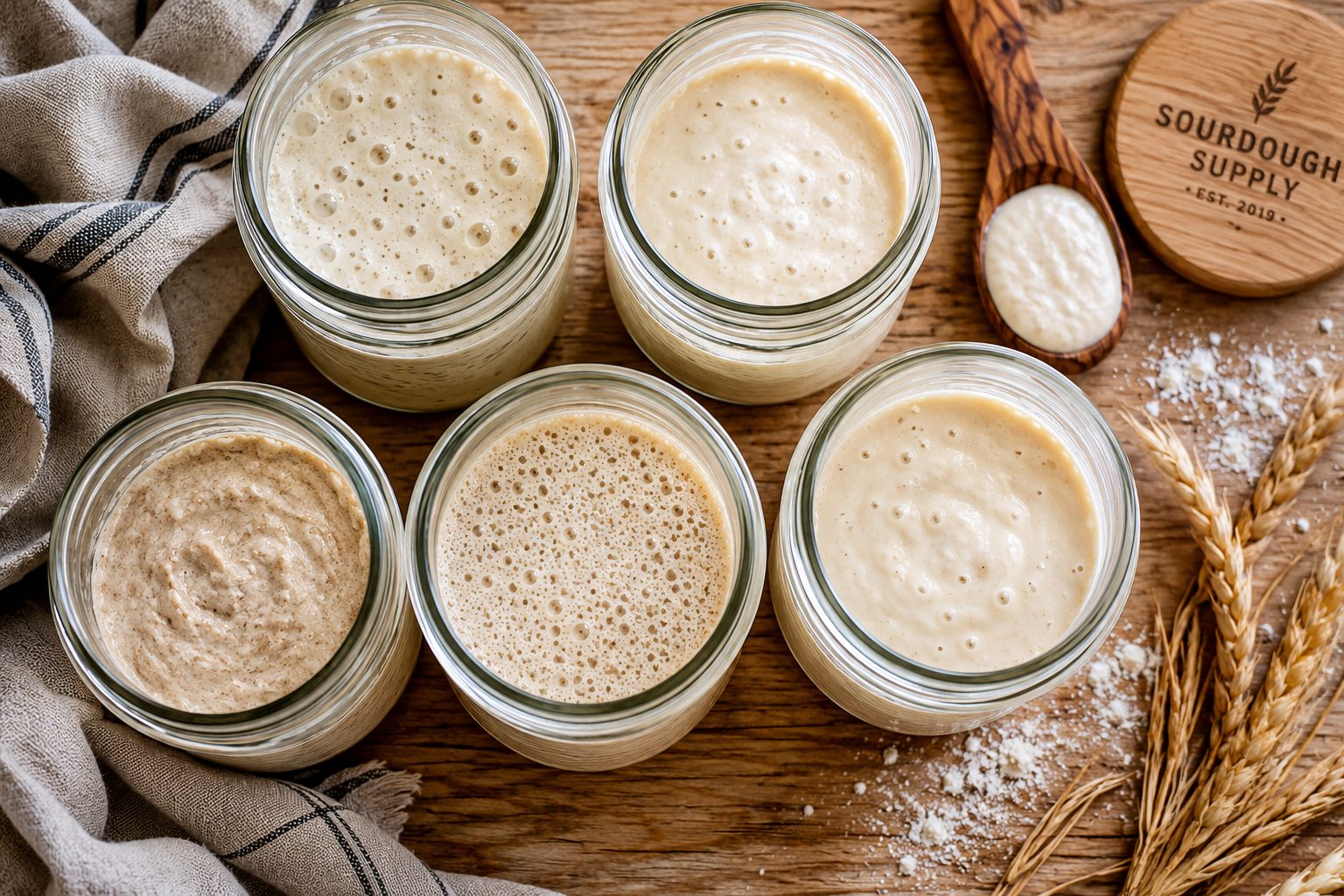
Sourdough Starter Kits
If you have decided to have a go at sourdough, first of all - welcome, it is one of the most rewarding things you can make at home. But we know the shopping side can be off-putting. People come to us all the time having looked at a "sourdough starter kits" online and felt completely lost, because the kits out there range from a single jar to a great big box stuffed with bits you will probably never touch.
So here is what we would tell you if you walked into the shop: you need far less than the internet suggests. Below we will walk you through what actually goes into a good beginner kit, where it is worth spending a little more, and what you can leave on the shelf for now.
If you would rather skip straight to it, our Build Your Own Sourdough Starter Bundle lets you put together just the pieces you need. It is the simplest place to start.
What is a sourdough starter kit, really?
At its heart, a starter kit is just the handful of things that keep a starter happy and get your first loaves out of the oven: a living culture, a jar to keep it in, and a few tools to mix, shape and bake. That is genuinely it. Everything else is a nice-to-have.
The reason we are a bit wary of some pre-made kits is that they tend to bulk out the box to look like better value. You end up paying for things that do not help you bake a better loaf. A good kit does the opposite — it gives you the essentials, in decent quality, and stops there.
The bit that really matters: your starter
If there is one thing worth getting right, it is the culture itself. You can replace a jar or a scraper any day of the week, but a sluggish, lifeless starter will hold you back no matter what else you own. A strong, active starter is the difference between a sad, dense loaf and one that rises beautifully with a proper open crumb.
Live or dried? Our honest take
You will come across two kinds of culture, and beginners often ask us which to go for.
A live starter turns up already awake and bubbling, ready to feed within a day or so. For most people starting out, this is the easier road — you are not waiting around hoping a dried culture wakes up. Our 30-year live sourdough starter arrives active and has years of strength behind it, so you can get baking quickly.
A dried starter is cheaper to post and keeps for ages on the shelf, but you will need to rehydrate it and feed it through a few cycles before it is strong enough to lift a loaf. There is nothing wrong with it if you are patient, but we find the wait puts a lot of beginners off before they have even started.
Our advice? Begin with a live culture. Once it is thriving you can always dry a little of your own as a backup.
What goes in a good beginner kit
Here is how we think about the pieces, and how much each one really matters when you are just getting going:
ComponentWhy it mattersHow much you need itLive starter cultureIt is what actually raises the loaf — the heart of the whole thingEssentialGlass starter jarKeeps the culture happy and lets you see it rise and bubbleEssentialDigital scaleSourdough lives and dies on accurate ratiosEssentialBanneton proofing basketHolds the dough's shape and draws out moisture for a better crustSoon afterBread lameGives you clean scoring and proper oven springSoon afterDough scraperMakes handling sticky dough (and cleaning up) far easierHandyBanneton linerStops sticking while you are still finding your feetOptional
If you would like to put exactly these pieces together without any padding, that is what the Build Your Own Sourdough Starter Bundle is for.
What we would buy first
If you are building a kit from scratch, this is the order we would do it in:
- The culture. Nothing happens without a living starter, so start here.
- A glass jar. Being able to see the starter climb the sides tells you exactly when it is ready. We are fond of our WECK glass starter jars because the wide mouth makes feeding and washing up so much easier.
- A digital scale. Cups will let you down sooner or later — weighing your ingredients is one of the simplest ways to get consistent loaves.
- A banneton. Once you are feeding with confidence, a proofing basket makes a real difference to the shape and crust. Have a look through our banneton proofing baskets — round is the easiest to start with.
- A bread lame. A proper scoring tool beats a kitchen knife every time, giving you cleaner cuts and better rise.
What you can happily skip for now
This is the part people thank us for. Plenty of kit add-ons look tempting but do very little for a first-time baker. You can leave the proofing boxes, the set of five lame blades, the decorative stencils and the branded tea towels well alone. A Dutch oven is genuinely useful, but the truth is most of us already have a lidded casserole that does the same job, so there is no rush to buy one specially.
Put the money you save towards a better culture and a decent jar instead. Those two choices will do far more for your loaves than any gadget ever will.
Your beginner kit, at a glance
If you just want a quick list to shop from, here is everything we would start with and nothing we would not:
- A live sourdough starter culture
- A glass jar with a wide mouth
- A digital kitchen scale
- A banneton proofing basket (round, to begin)
- A bread lame for scoring
- A dough scraper
- A lidded pot or casserole you already own
A quick word on buying in the UK
One thing worth knowing: a live culture is a perishable thing, so it pays to buy from someone who posts early in the week and packs it properly to survive the journey. Buying from a specialist also means your jar, banneton and culture are sensibly matched on size and quality, rather than bundled together at random. We pack and dispatch everything ourselves here in the UK, and we deliberately keep our range to the things that genuinely help you bake better bread.
If you would rather not piece it together yourself, our Build Your Own Sourdough Starter Bundle is the easiest way to get a complete, ready-to-go kit in a single order. And if all you need is the culture, you will find it among our sourdough starters.
Learn More About Sourdough
If you'd like to dive deeper into specific parts of the sourdough process, these guides will help.
- Beginner Sourdough Guide
- Essential Sourdough Tools
- Why Is My Sourdough Dense?
- Bulk Fermentation Explained
- Overproofed vs Underproofed Sourdough
- How To Score Sourdough For Better Oven Spring
- How To Shape Sourdough Properly
Questions we get asked a lot
Do I really need a kit, or just a starter?
You can absolutely begin with just a live culture and bits from your own kitchen. That said, a jar, a scale and a banneton make life much easier and your results far more reliable — and a sensible kit saves you buying the wrong sizes by trial and error.
Is a live or dried starter better for beginners?
We almost always point beginners towards a live starter. It is awake when it arrives, so you can bake within days rather than nursing a dried culture back to life first.
What jar size should I choose?
Somewhere around 500 to 850ml works well for most home bakers. It gives the starter room to double without climbing out of the jar, and a wide mouth makes feeding and cleaning so much simpler.
Do I need a banneton straight away?
Not on day one — but you will want one before long. It cradles the shaped dough through its final proof and gives you a rounder loaf with a better crust.
How soon can I bake after my kit arrives?
With a live culture, usually within a few days — just as soon as it is feeding happily and doubling reliably between feeds.
Whenever you are ready, our Build Your Own Sourdough Starter Bundle has everything you need and nothing you do not. Put your kit together and let's get that first loaf in the oven.