Feeding a sourdough starter is simple once you have done it a couple of times: equal weights of flour and water, stirred in once a day, until it rises reliably. This guide is the same routine we put in the box with every live starter we post, with a little more detail on each step.
What you need
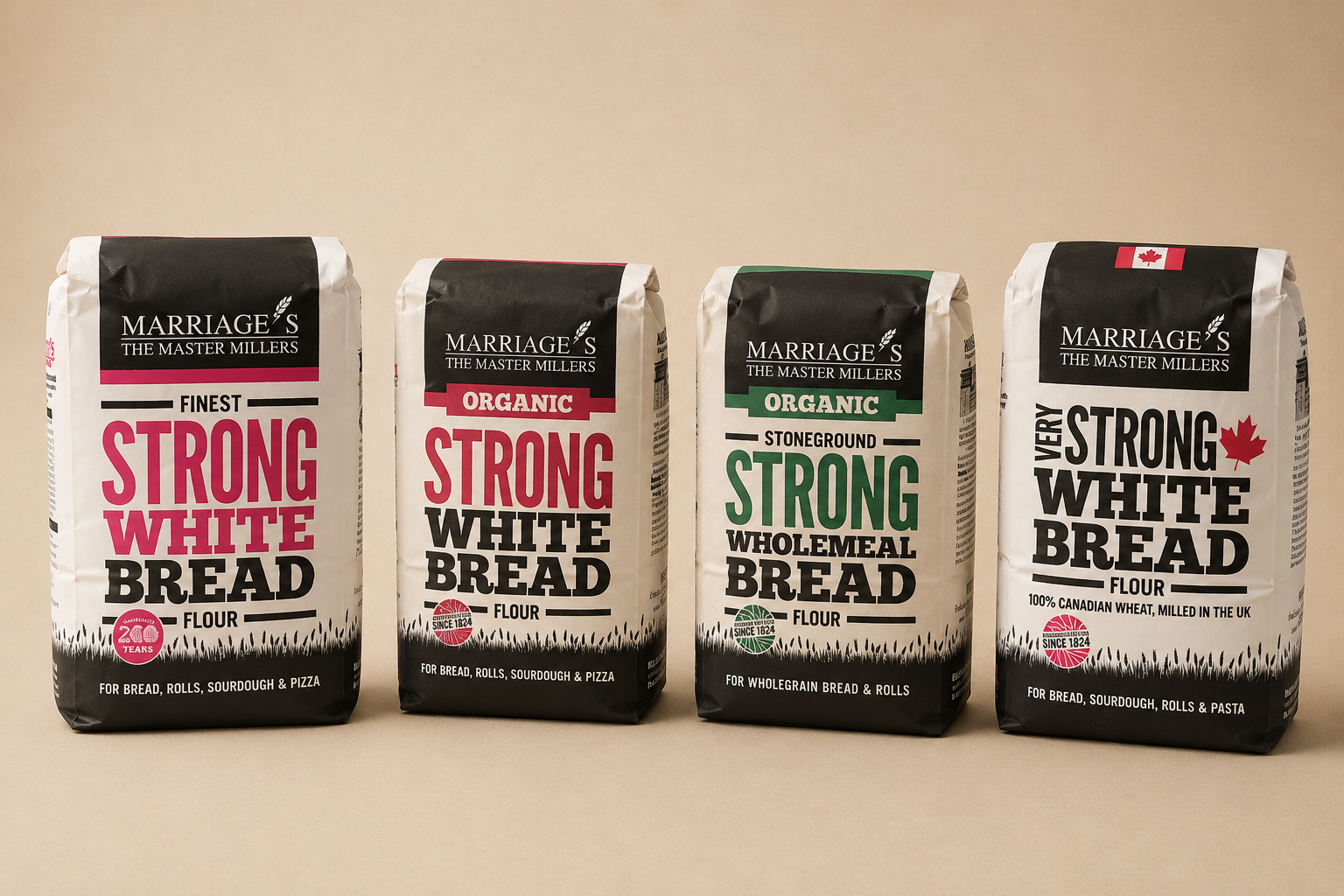
- Strong white bread flour. We feed ours on Marriage's Organic Strong White Bread Flour, and you can find it with our other flours for sourdough.
- Lukewarm water.
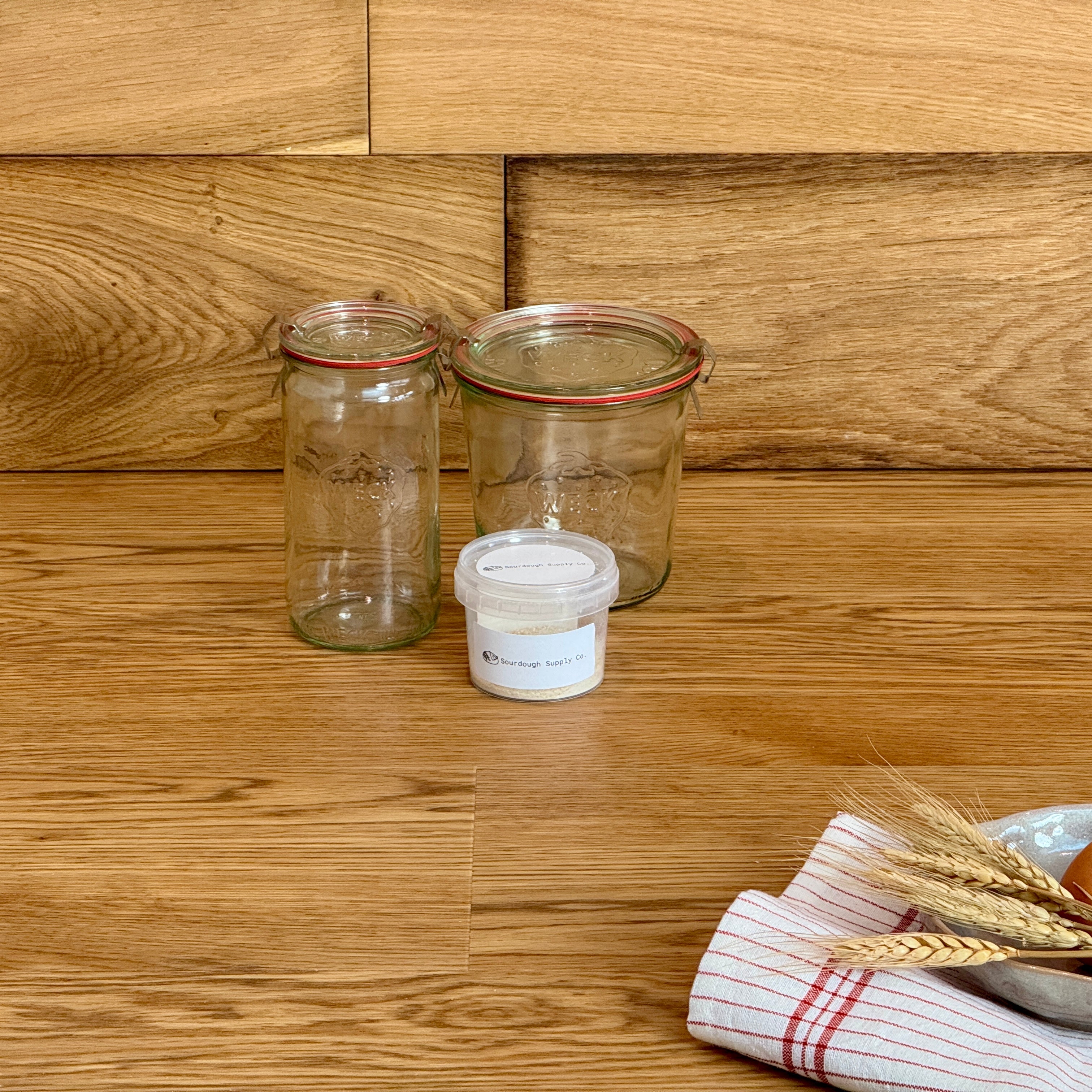
- A clean glass jar with a lid you can rest on loosely. A WECK jar is ideal, because the lid sits on top without sealing unless you clip it.
- Digital scales. Weighing rather than guessing is what keeps a starter strong and healthy.
When your starter arrives
A live starter can look a little quiet after its journey. That is completely normal. It just needs feeding and a couple of days to spring back into life.
Tip the starter into a clean glass jar. It might smell slightly tangy, which is a good sign.
Day 1: the first feed
- Add 50g of strong white bread flour.
- Add 50g of lukewarm water.
- Mix until smooth.
- Cover loosely, without sealing it tight, and leave it at room temperature for 24 hours.
Day 2: the second feed
After 24 hours you might start to see bubbles forming.
- Put 50g of the starter into a clean jar. You only need 50g, so the rest is not needed for this feed.
- Add 50g of flour and 50g of lukewarm water.
- Mix, cover loosely and leave it for another 24 hours.
How do you know your starter is ready?
Your starter is good to bake with when:
- it doubles in size within 4 to 6 hours of a feed,
- it is full of bubbles, and
- it smells fresh and pleasantly sour.
If it is not quite there yet, keep feeding it once a day in the same way until it is. Some starters take an extra day or two, depending on how warm your kitchen is.
How often should you feed a sourdough starter?
It depends on how often you bake.
If you bake regularly, keep it at room temperature and feed it every day.
If you bake once a week, keep it in the fridge and feed it once a week. When you want to bake, take it out, feed it, and let it become active again before you use it.
My starter is sluggish. What should I do?
Warmth is usually the answer. Move it to a warmer part of the house: an airing cupboard is a good spot. Keep feeding it once a day, and check you are weighing the flour and water rather than measuring by eye.
Can I use any flour?
Strong bread flour works best. If you can, feed it on the same flour it was raised on. Ours is fed on Marriage's Organic Strong White, so using the same flour is the simplest way to keep it behaving the way it did when it left us.
What about a dehydrated starter?
A dehydrated starter needs rehydrating first. Our guide on how to rehydrate a dried sourdough starter takes you through the three days. Then feed it exactly as above. Ours comes back to life in about 72 hours. If you are still choosing between the two, our guide to live vs dried sourdough starter covers the difference.
Troubleshooting your starter
There is grey liquid on top
That liquid is often called hooch, and it means your starter is hungry. Pour it off (or stir it in for a tangier loaf), then feed as normal. If it keeps appearing, feed a little more often.
It smells like nail varnish
A sharp, solvent smell is another sign of hunger, usually after a long gap between feeds. Two or three regular feeds will bring back the fresh, sour smell.
It rises, then collapses before you get to it
Your starter peaked while you were not looking, which usually means a warm kitchen. That is fine. To slow it down, feed it 50g starter with 100g flour and 100g water, which gives it more to eat and makes the peak last longer.
It is very runny
Use a little less water at the next feed, say 40g instead of 50g, until it thickens up to a thick-batter texture.
It has been in the fridge and will not rise
A starter straight from the fridge is cold and slow. Give it two or three feeds at room temperature, a day apart, and it will be back to doubling.
When to throw it away
Pink or orange streaks, or fuzzy mould on the surface, mean the starter has spoiled. Do not try to rescue it. Throw it away, wash the jar in hot soapy water, and start again with fresh starter.
What to do with sourdough discard
Discard is the starter you take out before each feed. It is still flour and water, so it does not have to go in the bin:
- Stir it into pancake or waffle batter.
- Roll it thin with a little oil and salt and bake it into crackers.
- Add a spoonful to pizza dough for extra flavour.
Keep discard in a covered jar in the fridge and use it within about a week. It does not need feeding while it waits.
Stuck?
If you ever get stuck, email us at support@sourdoughsupply.co.uk and we will be more than happy to help. Once your starter is lively, our beginner sourdough guide takes you through your first loaf.
Ingredients of our starter: wheat flour and water. Contains gluten.